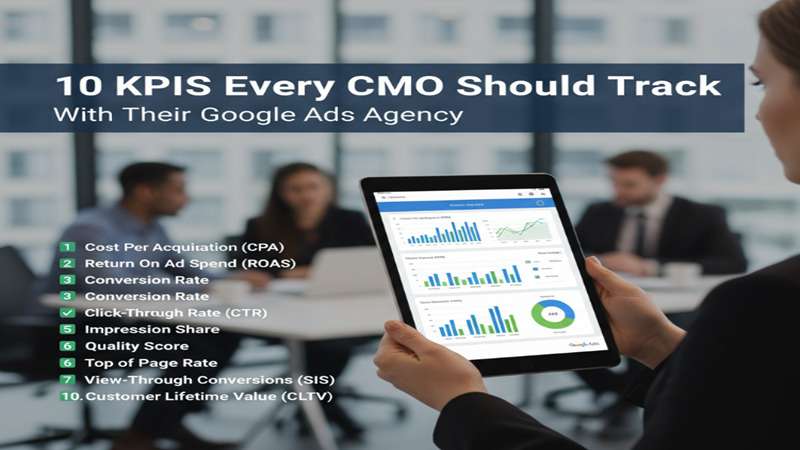
You’re a CMO, not just a marketer. You’re looking at the big picture, the bottom line, and how every dollar spent on advertising translates into tangible business growth. But let’s be real, diving deep into Google Ads campaign reports can sometimes feel like sifting through a spreadsheet jungle. You need more than just clicks and impressions, don’t you? You need insights that speak to the boardroom, not just the ad platform. In fact, businesses that align their marketing KPIs with overall business objectives are 71% more likely to exceed revenue goals (HubSpot) (Source).
The Metrics That Matter for Enterprise Ad Success
The core challenge for many CMOs isn’t a lack of data, it’s a surplus of the wrong kind. We’re often drowning in vanity metrics while the real indicators of strategic success remain hidden. For instance, a staggering 47% of marketing leaders admit they struggle to connect their marketing efforts directly to revenue (Statista) (Source). That’s where a shift in focus, and a strong partnership with your google ads agency, becomes critical. You need to push past the surface and demand KPIs that tell a story of profit, growth, and long-term value.
Here are the first five essential KPIs you should be scrutinizing:
1. Return on Ad Spend (ROAS)
This is your ultimate financial barometer. ROAS tells you, for every dollar you spend on ads, how much revenue you’re getting back. It’s not just about sales volume, it’s about the efficiency of your ad spend. And let’s be clear, a high ROAS signals that your campaigns are not just active, they’re profitable. An impressive 80% of marketers consider ROAS their most important metric for evaluating ad performance (HubSpot) (Source).
2. Customer Lifetime Value (CLTV) from Ads
Why stop at the first purchase? Understanding the CLTV generated by customers acquired through Google Ads gives you a much richer picture. It helps you see which campaigns aren’t just driving initial conversions, but are actually bringing in your most valuable, loyal customers over time. And that’s a game-changer for long-term strategy.
3. Customer Acquisition Cost (CAC) by Channel/Campaign
You know what a new customer costs, but do you know what a new customer *from Google Ads* costs? And better yet, what’s the CAC for customers acquired through specific ad campaigns or keywords? Breaking down CAC helps you identify inefficiencies and double down on what’s truly cost-effective. It’s about smart spending, not just big spending.
4. Lead Quality Score / Conversion Rate (Post-Click)
Getting clicks is easy. Getting *qualified* clicks that turn into high-value leads or sales, that’s the art. Your agency should be tracking not just the conversion rate on your landing page, but the *quality* of those conversions. Are they filling out the right forms? Are they progressing through your sales funnel? Poor lead quality can waste up to 27% of B2B marketing budgets annually (Statista) (Source), so this KPI is crucial.
5. Profit per Conversion (PPC)
Revenue is great, but profit is better. Work with your google ads marketing agency to calculate the actual profit generated by each conversion, not just the revenue. This involves factoring in your cost of goods sold, operational expenses, and profit margins. It’s a deeper dive, but it ensures your ad spend is contributing directly to your company’s financial health.
How to Measure Impact Beyond CTR and CPC
While CTR and CPC are foundational, they don’t tell the whole story of your campaigns’ strategic impact. As a CMO, you need to understand how your Google Ads are moving the needle on brand perception, market share, and overall business growth. This is where your adwords management services truly earn their stripes, by providing insights that transcend basic performance metrics.
Let’s unpack the next five KPIs that offer a more holistic view:
6. Brand Search Lift & Brand Mentions
Are your Google Ads making people search for your brand directly? A significant lift in branded search queries after an ad campaign indicates increased brand awareness and recall. And look for spikes in brand mentions across social media or review sites. This shows your paid efforts are resonating and creating a halo effect, proving your ads are doing more than just driving direct response.
7. Impression Share (Absolute Top & Top)
In competitive markets, simply appearing isn’t enough. You want to know if your ads are showing up in the absolute top position or at least the top of the search results page. High impression share in these prime spots means you’re dominating visibility for your key terms. WordStream (Source) indicates that a 10% increase in impression share can lead to a 5-7% increase in conversions in competitive industries, so this isn’t just a vanity metric, it’s about market presence.
8. Time to Conversion / Customer Journey Length
How long does it typically take for a user to convert after their first interaction with your Google Ad? Understanding this journey length can inform your retargeting strategies and budget allocation. A shorter time to conversion might indicate highly effective bottom-of-funnel ads, while a longer journey suggests a need for more nurturing through various touchpoints. Your best google ads agency should be mapping this for you.
9. Audience Segment Performance & Incrementality
Are certain audience segments performing significantly better than others? Beyond that, are your ads truly bringing in *new* customers, or are they just converting people who would have converted anyway? Incrementality testing helps you understand the true added value of your ad spend for specific segments. Platforms like Quickads, an AI-powered ad creation and optimization suite, help marketers automate ad testing and scale creative production, giving you deeper insights into what resonates with different audiences.
10. Creative Element Performance & Iteration Velocity
It’s not enough to know *which* ads work, but *why*. Your agency should be able to break down performance by creative elements: headlines, descriptions, images, video snippets. And how quickly are they iterating on these insights? The ability to rapidly test, learn, and deploy optimized creatives is a huge competitive advantage. Brands leveraging AI in their ad campaigns see a 15-20% improvement in conversion rates (Google Marketing Insights) (Source) because they can iterate faster and smarter.
Translating Metrics into Boardroom Insights
As a CMO, your role is to connect these granular marketing activities to the broader business strategy. When you present these ten KPIs, you’re not just showing ad performance, you’re demonstrating strategic impact. You’re talking about market share, customer equity, and profit contribution, not just clicks and impressions. It’s about being proactive and showing leadership.
So, how do you make this happen? It starts with clear communication and expectations with your agency google ads. You need to:
- Set clear, measurable goals: Ensure your agency knows your business objectives, not just your advertising goals.
- Demand regular, insightful reporting: Move beyond default dashboards. Ask for reports that highlight these strategic KPIs and explain their implications.
- Collaborate on strategy: Your agency isn’t just an executor; they’re a partner. Work together to interpret data and adjust strategy based on these deeper insights.
- Focus on the “So What?”: For every metric, ask, “So what does this mean for our business?” This helps translate data into actionable insights for the board.
Key Takeaways
Navigating the complex world of Google Ads requires a strategic mind, especially for CMOs. Here are some key takeaways:
- Focus on KPIs that demonstrate true business impact, like ROAS and CLTV, rather than just surface-level metrics.
- Partnering with a proficient google ad agency is crucial for extracting these deeper, more strategic insights.
- Demand transparency and proactive analysis from your ad agency, ensuring they’re tracking metrics that align with your overall business objectives.
- Leverage tools and strategies that allow for granular analysis of audience segments and creative elements to optimize for profit, not just clicks.
- Always translate ad performance into boardroom-ready insights, showcasing how Google Ads contribute directly to revenue, profit, and brand growth.
Conclusion
The days of simply tracking CTR and CPC are long gone for enterprise CMOs. To truly drive impact and justify significant ad spend, you need a holistic view of performance that connects directly to your company’s strategic goals. By focusing on these ten critical KPIs, you’re not just managing ad campaigns; you’re steering a powerful engine of growth. And with the right google ad marketing agency by your side, armed with these insights, you’ll be well-equipped to make data-driven decisions that propel your brand forward, ensuring every ad dollar works harder and smarter for your business.
For more info visit llookwhatmomfound