Key Takeaways
- Technological advances, such as drones and smart sensors, are revolutionizing commercial roofing inspections and ongoing management, enabling greater accuracy and efficiency in identifying issues.
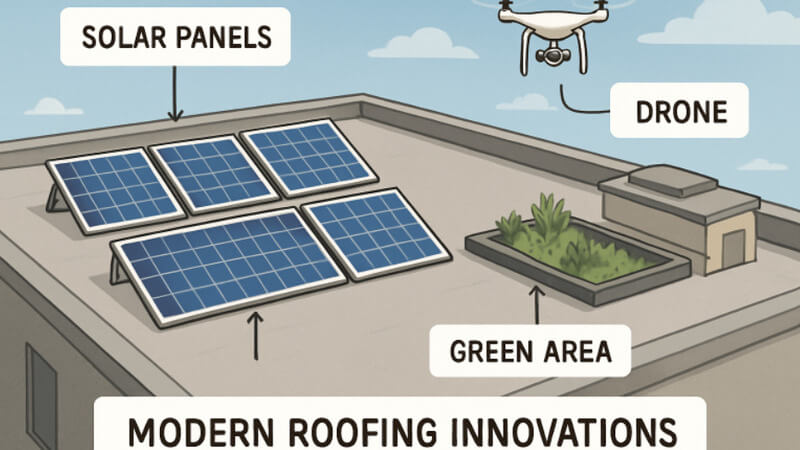
- Sustainable solutions, including cool roofs, green roofs, and solar integration, are lowering operating costs and reducing the environmental footprint of commercial buildings.
- Modern materials and robotics-driven installation techniques are enhancing both the durability of roofs and the efficiency of installation for the long term, addressing many traditional pain points in commercial roofing projects.
Table of Contents
- Technological Advancements in Roofing
- Energy-Efficient and Sustainable Roofing Solutions
- Innovative Materials and Techniques
- Conclusion
Recent advancements in commercial roofing have significantly transformed the industry, making it more efficient, sustainable, and technologically sophisticated than ever before. The rapid development and adoption of new materials and technologies have expanded the range of choices available to building owners, enabling them to enhance energy performance, minimize environmental impact, and prolong the lifespan of their roofs. These innovations go far beyond traditional methods and are helping the industry adapt to changing market demands and climate considerations. As commercial roofing Kansas City increasingly adopts these modern trends, property managers and facility owners can enjoy substantial benefits. Safer, more accurate inspections, smarter monitoring capabilities, and a host of eco-friendly alternatives are becoming common, aligning with evolving regulatory frameworks and shifting customer expectations. For organizations committed to staying ahead, understanding and utilizing these innovations is a clear competitive advantage.
The commercial roofing landscape is being redefined by technologies ranging from drone inspections that swiftly cover complex rooftop sites to integrated solar platforms that convert rooftops into self-sustaining power sources. These groundbreaking approaches not only reduce operational costs but also help organizations achieve ambitious sustainability goals and ensure future readiness. Whether retrofitting legacy structures to extend their usefulness or designing entirely new buildings with resiliency in mind, knowledge of and adaptation to these modern advancements is crucial. Proactive facility managers and owners who invest in innovative roofing solutions are better equipped to secure long-term value from their properties, ensure occupant safety, and adapt seamlessly to obliging regulations and environmental standards.
Technological Advancements in Roofing
Technology is reshaping commercial roofing at a rapid pace, fundamentally altering the way contractors and property managers inspect, monitor, and maintain their rooftops. Modern digital tools, such as drones and Internet of Things (IoT) devices, are making the inspection process safer and far more informative, allowing roofing professionals to gather high-resolution data and useful real-time alerts with unparalleled precision.
Drone Inspections
Drones equipped with advanced cameras and thermal imaging sensors are revolutionizing rooftop inspections. In the past, safely inspecting a large or complex commercial roof often required significant time, effort, and exposure to potential hazards. Today, drones can access these surfaces and scan every corner of a building’s rooftop in just minutes, capturing a comprehensive array of visual and thermal data. By detecting building envelope issues, trapped moisture, or wear spots early on, drones enable faster processing of insurance claims and more accurate repair estimates. Even more importantly, drone technology supports ongoing preventative maintenance efforts, minimizing downtime and avoiding costly, unplanned repairs.
Smart Roofing Systems
Smart roofing systems incorporating IoT technologies use embedded sensors strategically placed throughout a structure’s roofing system to monitor critical variables such as temperature, humidity, stress, and even minor movement. This real-time monitoring capability provides unprecedented insights and enables facilities teams to respond swiftly to early warning signs of leaks, insulation breakdowns, or other structural vulnerabilities. For property managers, this means being able to schedule repairs proactively, before a small issue escalates into a costly crisis. Smart systems provide a constant feedback loop, enhancing both reliability and operational transparency while extending the effective life of the roof and lowering overall maintenance expenses.
Energy-Efficient and Sustainable Roofing Solutions
With rising utility costs and increasingly strict building codes, the push for energy-efficient commercial roofing is stronger than ever. New sustainable strategies and materials are enabling organizations to meet established green building certifications, such as LEED, and improve their environmental impact. By integrating eco-friendly solutions, businesses can save significant amounts on energy consumption while enhancing their public image and commitment to sustainability. These efforts also contribute directly to compliance with local and international environmental regulations, which are becoming increasingly demanding each year.
Reflective Coatings
Reflective, or “cool” roof coatings, are a straightforward yet effective energy-saving technology. By applying highly reflective coatings, often white or light-colored, to the roof surface, building owners can dramatically reduce the amount of solar radiation absorbed by the structure. This not only decreases indoor temperature fluctuations and reliance on air conditioning but also helps prolong the life of the roofing material by minimizing thermal stress and UV degradation. Especially in regions with intense sunlight or urban areas subject to the heat island effect, cool roofs can provide substantial reductions in both peak energy demand and overall utility expenses. According to the U.S. Department of Energy, cool roofs can reduce a building’s energy use, making them a highly cost-effective solution for large commercial properties.
Green Roofs
Green, or vegetative, roofs are gaining popularity in commercial settings, particularly in dense urban landscapes where traditional green spaces are scarce. These systems consist of a waterproof membrane topped with soil and resilient plant species, transforming unused rooftop spaces into lush, functional landscapes. Beyond their visual appeal, green roofs offer significant ecological and economic benefits: they provide natural insulation, reduce building energy consumption in extreme temperatures, absorb stormwater to mitigate runoff, and help filter airborne pollutants. Moreover, green roofs can reduce heat island effects and noise pollution, while also improving the quality of life for occupants and surrounding communities.
Solar-Integrated Roofing
Many commercial buildings are now outfitted with solar technology, such as photovoltaic panels and solar shingles, seamlessly integrated into their roof structures. Unlike traditional rooftops, these solar-integrated solutions not only offer protection from the elements but also turn otherwise static surfaces into reliable sources of renewable energy. Thanks to advances in lightweight and flexible solar materials, installation is now possible on a wider variety of roof shapes and structures, eliminating many of the limitations former technologies imposed. By generating clean electricity on-site, these buildings reduce operational expenses. They may even benefit from generous renewable energy incentives or rebates, which support both their organizational sustainability commitments and public relations efforts.
Innovative Materials and Techniques
Recent years have seen a proliferation of innovative materials and construction techniques designed to address the unique challenges of commercial roofing, such as extreme weather, heavy mechanical loads, chemical exposure, and constant roof traffic. Traditional options, such as multi-ply built-up roofs, are being supplanted by high-performance membranes and composites that offer greater resistance to damage, as well as superior longevity and ease of maintenance. As a result, commercial roofs are better equipped to protect valuable assets and support long-term business continuity, while also complying with the latest regulations.
Advanced Roofing Materials
Materials such as thermoplastic polyolefin (TPO), polyvinyl chloride (PVC), and modern modified bitumen have established new industry standards for waterproofing, flexibility, and environmental performance. Designed to withstand the rigors of high winds, hail, solar radiation, and pooling water, these advanced options vastly outperform older asphalt or gravel-based roofs. Furthermore, many of these materials can be manufactured with high reflectivity, which further improves energy efficiency and helps commercial buildings meet both local environmental codes and voluntary certifications.
Robotics and Automation in Installation
In the installation phase, robotics and automation are becoming valuable tools for commercial roofing contractors. Automated equipment can precisely lay membranes, fasten insulation boards, and even weld seams with consistent accuracy. This not only speeds up the overall process but also enhances the quality and durability of the finished roofing system, while reducing the risk of human error, a common concern in large-scale, labor-intensive projects. The integration of robotics enhances worker safety by reducing exposure to harsh conditions and repetitive motion, thereby helping to ensure projects stay on schedule and on budget.
Conclusion
The commercial roofing industry stands at the forefront of a technological and environmental transformation, with new methods and materials fundamentally changing how roofs are designed, installed, and managed. Drone-based assessments, embedded smart sensors, cool and green roofs, solar integration, and advanced membranes represent just a handful of how commercial roofs are becoming more durable, efficient, and sustainable. By embracing these innovations, property owners and facility managers can dramatically reduce operating costs, extend the lifespan of their roofing assets, and contribute to a more sustainable urban environment. As the pace of technological progress accelerates, those who proactively invest in modern roofing solutions will be best positioned to protect and maximize the value of their real estate portfolios for years to come.